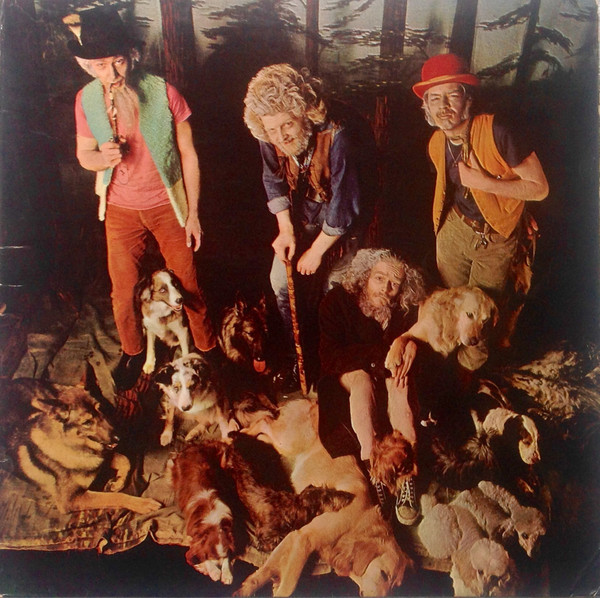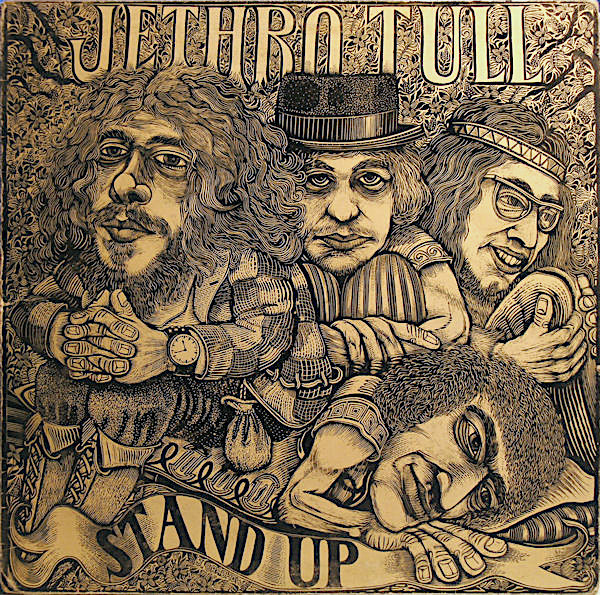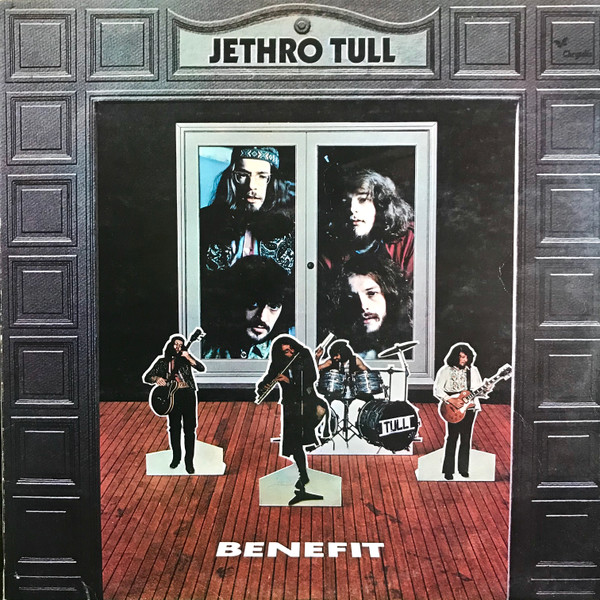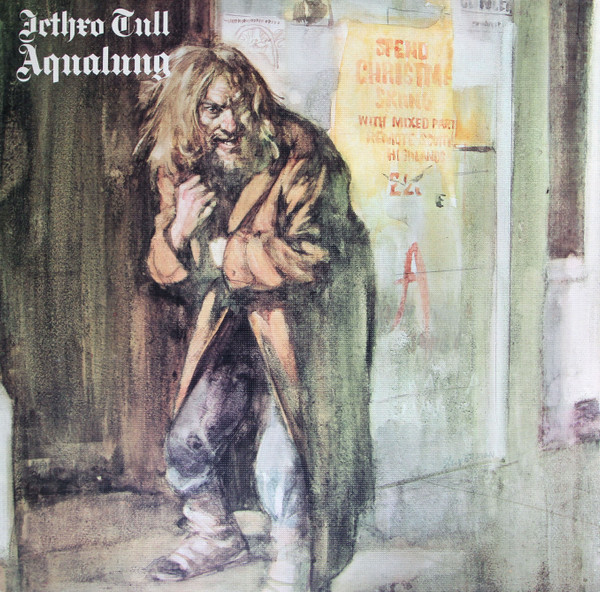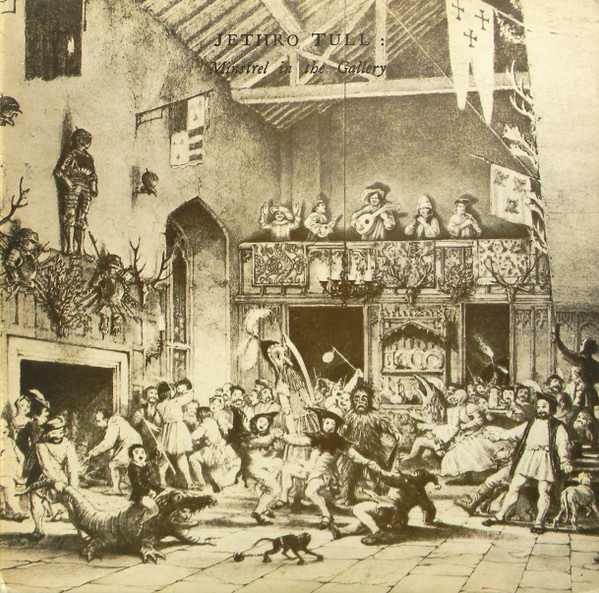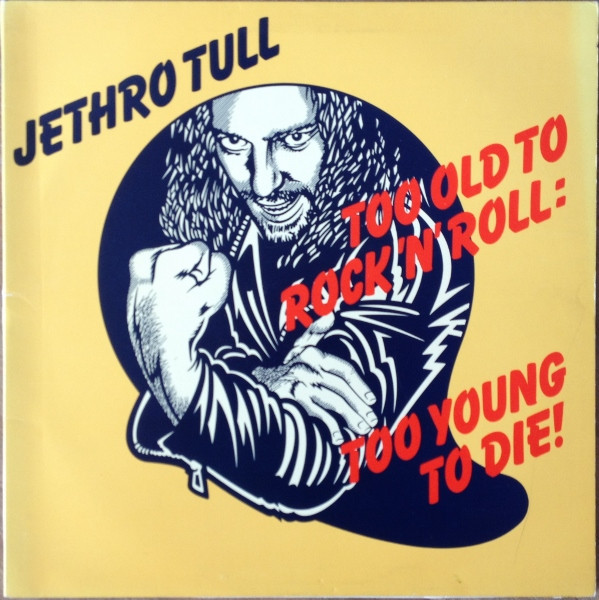
A phenomenon in music history. The mix of hard rock, folk, blues, and cheerful melodies has given Jethro Tull their distinctive sound since 1968.
Their music, which started as blues with an experimental edge, undeniably shows influences from classical music, hard rock and jazz, as well as Asian and Celtic folk music. This makes it very difficult to point to other musicians making similar music. More than other rock bands, their music stands apart from the rest of rock music. A striking feature of Jethro Tull is that frontman Anderson plays almost exclusively acoustic instruments: the "unplugged guy in a medium to heavy rock band". He mainly plays flute and acoustic guitar. "My role in life has always been to be an acoustic musician, but for the past 38 years I've had rather noisy friends!"
Anderson attributes the difference between their music and that of other prog rock bands partly to Jethro Tull's aversion to drugs: "I can safely say: I hate hippies, okay? And I hate psychedelic music and I hate everything to do with drugs. Jethro Tull has never been involved with that."
While other bands influenced them in their early years, they quickly developed a unique, always recognisable sound.
More or less consciously, Anderson chooses to stay in the slipstream of the pop world. A bit in the background but always present, he believes this keeps the band artistically afloat. Over the years, the band has generally received overwhelmingly positive reviews. They are known as eccentrics, top musicians and people with humour. Ian Anderson lets it be known through his lyrics that he is a language alchemist and verbally adds to this during his concerts.
31 albums later, the gentlemen are still performing. The stable factor throughout the years is flautist/guitarist Ian Anderson, who has guided the band through various line-up changes. The group's best-known songs date from the late 1960s and early 1970s: 'Aqualung', 'Locomotive Breath' and 'Bourree'.
Top 2000
In the 23rd edition of the Top 2000, there is only one entry, at number 1112. It is the song Locomotive Breath.
Sunday Morning Classic
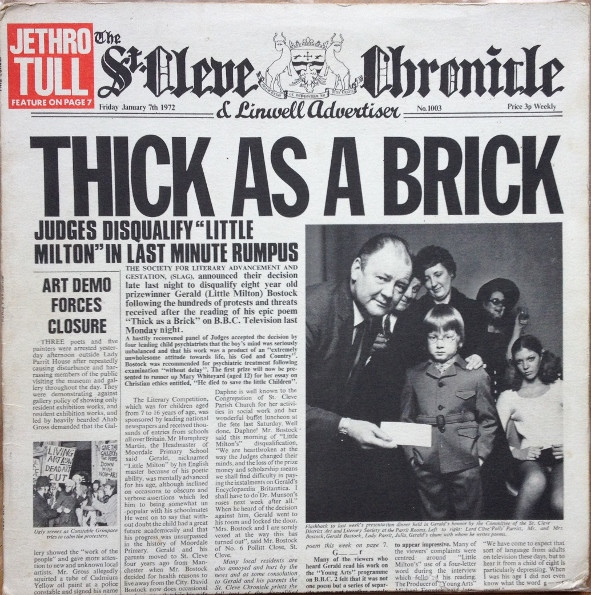
A distinctive band with so much beautiful music certainly fits on our Sunday Morning Classic stage. It was their turn on 29 October 2023 with the album "Thick as a Brick" from 1972.
After releasing the excellent LP “Aqualung” by ‘his’ Jethro Tull, Ian Anderson was almost accused of having made a progressive concept album. Anderson denied this vehemently and was opposed to what he saw as pretentious intellectual posturing, which other bands, in his view, were guilty of. In reaction, he wanted to make a kind of parody of a concept album. He said this about it himself: “I’ll give you the mother of all concept albums”. And so he composed “Thick As A Brick” in 1972, which ironically became an absolute classic in this genre.
At that time, it was not uncommon to make very long tracks that took up an entire side of a record. Anderson went completely over the top with his decree and also mocked this phenomenon by writing Thick As A Brick as one single track. Only the practical limitations of the LP forced him to insert a break halfway through.
Almost as legendary as the music itself is the packaging. The original sleeve was presented as a newspaper (The St. Cleves Chronicle) that could be unfolded into a twelve-page tabloid. On that newspaper sleeve is an image of the fictional eight-year-old schoolboy Gerald Bostock, who had submitted a humorous poem about ‘youth’, titled…”Thick As A Brick”. And this poem is precisely the text of the LP. To fully appreciate the humour and irony embedded in TAAB, some knowledge of Monty Python's work from that time is a bonus.
“Thick As A Brick” is a monument in (prog) rock history. The whole package – concept, music, lyrics, sleeve, humour, irony – was groundbreaking for its time and as a ‘progressive’ work had more quality than many ‘serious’ progressive works it was meant to parody. The music and lyrics demand a lot from the listener. The entire composition is complex but contains the familiar Jethro Tull elements of rock and folk, while also weaving in jazz. Certain passages sound so ‘natural’ and freely played that they seem improvised. This is not entirely untrue, as some parts were recorded in one take.
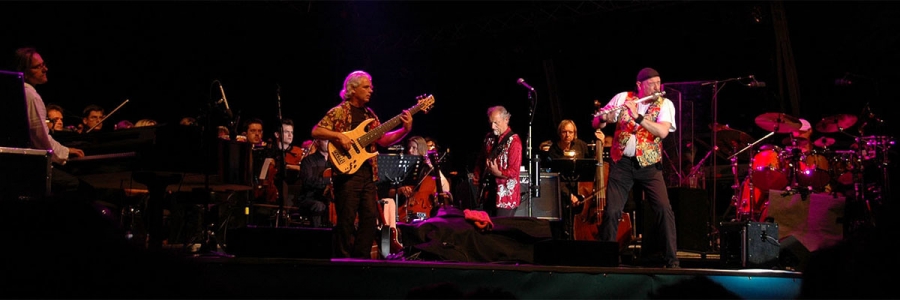
Quiet sections with acoustic guitar, vocals and flute alternate with fairly heavy rock, featuring the sometimes sharp and aggressive guitar playing of Martin Barre. John Evan provides a significant amount of keyboard playing for Tull, which strongly contributes to the progressive character of the whole. Ever-present is the creator of it all, Ian Anderson, with his characteristic voice, acoustic guitar playing and his signature instrument: the flute. The nearly three-quarter-hour-long epic is a succession of tempo and mood changes and is built from various themes that recur in variations. It could be seen as a minor flaw that this is a bit too much of a good thing. That may be so, but so much happens and the passages flow so well into each other that boredom never has a chance to set in. I'll give just a few examples. An extended rock guitar solo, the suddenly appearing violin, a lovely melodic miniature of acoustic guitar, flute and supporting organ work sound delightful. But also a pronounced bass guitar, staccato drums and an orchestra that appears out of nowhere provide the much-needed variety.
A 40th anniversary edition, a recent successful tour around this opus and the release of a sequel – “Thick As A Brick 2” – by Anderson seem to underline its timelessness. But the original version doesn't need that at all. Thick still stands like a house built of solid bricks.
by Fred Nieuwesteeg (Prog Wereld)
Source: NPO and Wikipedia Photo: Snafje and SDO 216
Below you will find a selection of albums made by Jethro Tull. If you are looking for a specific album, please let us know. We are happy to help you search!