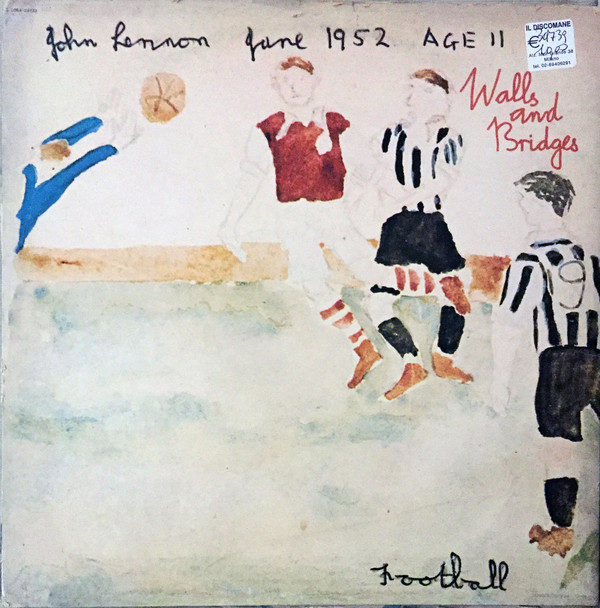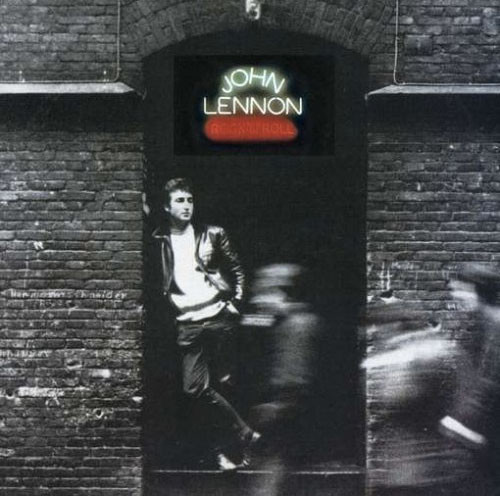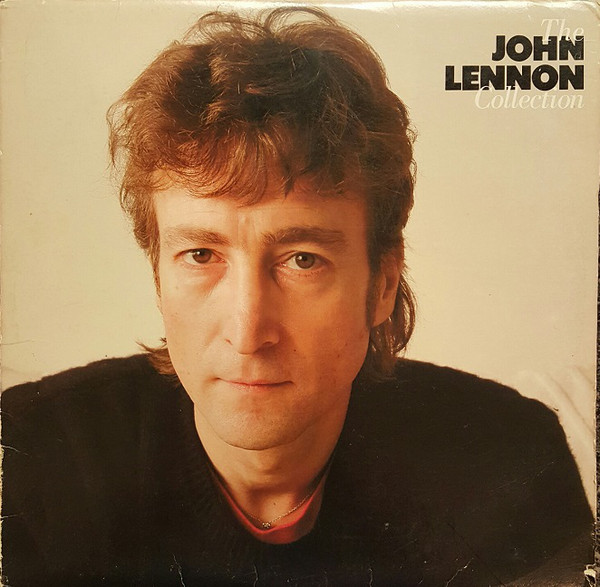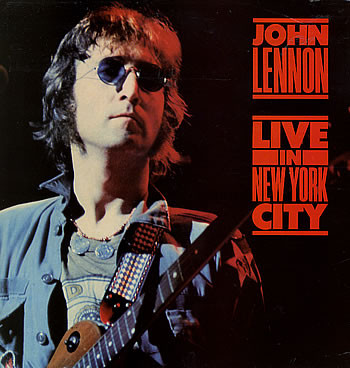
You never forget the major events in your life... I was 15 years old, a fan of The Beatles, and was having breakfast on 9 December 1980 when I heard that John Lennon had been murdered. I have been to New York four times, and during my visits to the Big Apple, I also visited the Strawberry Fields memorial in Central Park a few times.
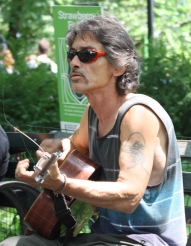
So many years after his death, there is still a lot of attention and activity at his memorial site. Musicians, flowers, sorrow and silence.
You may say I'm a dreamer But I'm not the only one I hope some day you'll join us And the world will be as one
John Lennon
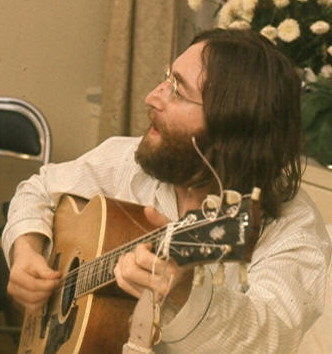
John Winston Ono Lennon MBE (born John Winston Lennon, Liverpool, 9 October 1940 – New York, 8 December 1980) was an English pop musician, peace activist and founder of the Liverpool group The Quarrymen, which after some changes in line-up evolved into The Beatles. Together with Paul McCartney, George Harrison and Ringo Starr, Lennon played an important role in pop music with this group.
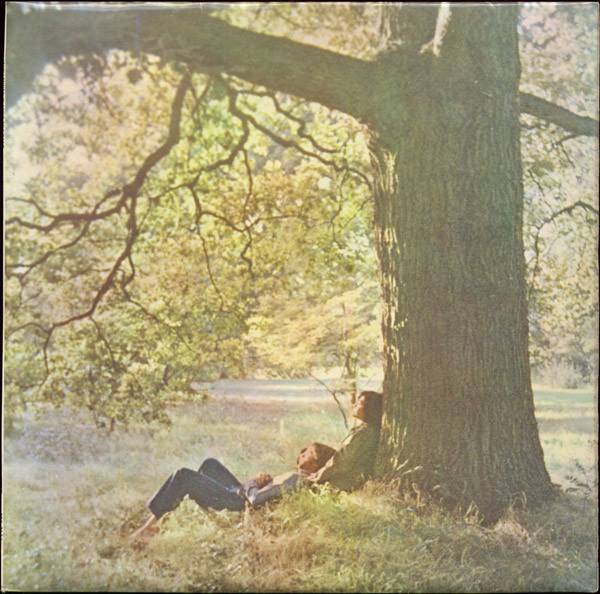
Even before the end of The Beatles, Lennon founded the Plastic Ono Band with his second wife Yoko Ono and became one of the key figures of the hippie movement. Besides his musical contributions, Lennon was also known for his political and philosophical stance as a peace activist and freethinker, both in his music as a member of The Beatles, with the Plastic Ono Band and as a solo artist: notably with the songs Give Peace a Chance, Power to the People, Happy Xmas (War is over) and Imagine.
Lennon proved to be a remarkable figure in pop music. When The Beatles decided in the mid-sixties to speak out more on social issues and world events (such as the Vietnam War), against the wishes of manager Brian Epstein, Lennon developed into a spokesperson for a generation.
John Lennon caused an international scandal and a boycott of The Beatles through an interview with the Evening Standard. "The Beatles are more popular than Jesus Christ," he claimed, which not only led to a record boycott in the US but also a broadcast boycott by the NCRV. In November 2008, this statement was officially forgiven by the Vatican.
Lennon came increasingly under the influence of avant-garde artist Yoko Ono. He left his then-wife Cynthia Powell and married Ono in March 1969.
On the afternoon of 8 December 1980, the Lennons had a photoshoot at home in the Dakota building on 72nd Street with photographer Annie Leibovitz. These would be the last photos showing the couple together. Later that day, they went to The Hit Factory studio to work on recordings. Upon leaving the apartment, Lennon signed a copy of Double Fantasy for Mark David Chapman, while another fan took a photo. Upon returning, Lennon was shot outside his home at 22:50 by Chapman with four of the five bullets (one shot missed Lennon and went through a window of the building) from a .38 Charter Arms Special revolver. Two shots hit him in the back, causing him to turn around, the other two struck his left shoulder. Because Lennon was bleeding heavily, the arriving police officers did not wait for an ambulance but took him in a police car to Mt. Sinai West Hospital. Although a blood transfusion was attempted, he died a few minutes after arrival. He was declared dead at 23:07; his wife was informed around 23:15. John Lennon was cremated on 10 December at Ferncliff Crematory in Ardsley, New York.
Paul McCartney initially reacted by hanging up the phone at home to make himself unreachable. Later he stated: "I still can't process it. John was a great guy. He will be missed all over the world but will live on in memory because of his art, music and contributions to world peace."
Yoko Ono scattered Lennon's ashes in Central Park, where the Strawberry Fields memorial was later established.
Top 2000
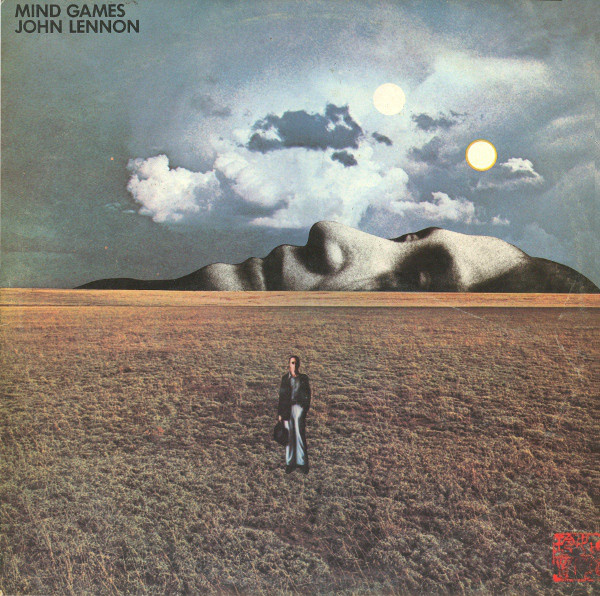
In the 23rd edition of the Top 2000, John Lennon appears with two entries:
Want to hear more Lennon songs in the Top 2000? Then make use of our Top 2000 Inspiration playlist on Spotify.
Sunday Morning Classics
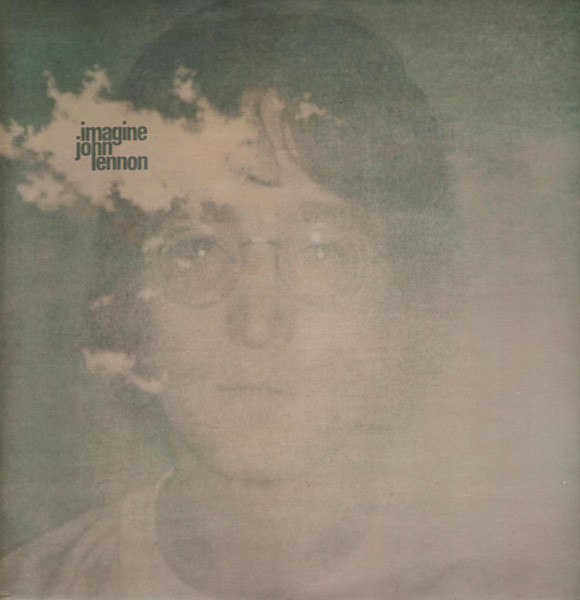
After The Beatles on 08-03-2020 and Paul McCartney on 03-05-2020, it was finally John Lennon's turn on 16 October 2022 as Sunday Morning Classic with his 1971 album Imagine.
Musically, Lennon, the old rocker as he would always be remembered, keeps things straightforward on Imagine. Solid, direct, without experiments. So we can listen very well and without distraction to the lyrics, which are much less tormented than on his previous album, as judging by ‘Imagine’ John seems to be coming to terms with himself.
Only on ‘How’ is there still doubt. For example, he asks how he can give love... if he doesn't know how to give. But that same love seems to have freed him from much of his old doubts and problems, as evidenced by the very beautiful ‘Oh My Love’ and the immensely cheerful, intensely happy ode to the woman responsible for it: Yoko Ono (the title? ‘Oh Yoko!’).
But most of the songs on this Lennon album carry a message. Now that he is no longer digging so deep into his own soul, John has started to look at what he dislikes in society, which has resulted in some very sharp, albeit sometimes touching simple songs. That simple element is a bit too strong on ‘I don’t wanna be a soldier mama, I don’t wanna die’, where some open doors are kicked in, but thanks to Lennon's relentless sincerity here as well, and the very nicely hollow Phil Spector production, it has become a more than acceptable piece of music.
Better examples of Lennon railing mainly against hypocrisy, false morality and politicians are the deceptively cheerful ‘Crippled Inside’ (with Nicky Hopkins on piano and mate George on Dobro) and the very strong ‘Gimme Some Truth’ with lines like ‘I’m sick and tired of hearing things from uptight, short-sighted, narrow minded hypocrites’ and again very nice support from Harrison.
But there are many other tracks that should not go unmentioned. The utopian title track ‘Imagine’, for example, or the very well introduced ‘It’s So Hard’ by the late King Curtis on tenor, which actually bridges the doubts of the previous album and the peace of mind he has now found alongside Yoko. Or especially the terribly beautiful ballad ‘Jealous Guy’, undoubtedly one of the most beautiful melodies Lennon – or any Beatle – ever penned.
And then there is ‘How Do You Sleep’, one of the sharpest personal attacks ever recorded on vinyl to the knowledge of the Working Group. The victim of that song is Paul McCartney, whose character and especially music Lennon spares no criticism of (witness lines like ‘The only thing you done was yesterday’ and ‘those freaks was right when they said you were dead’).
(source: Humo 1971)
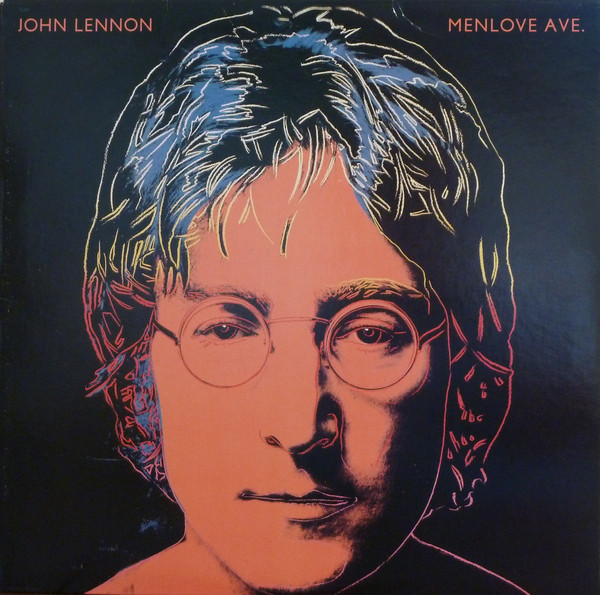
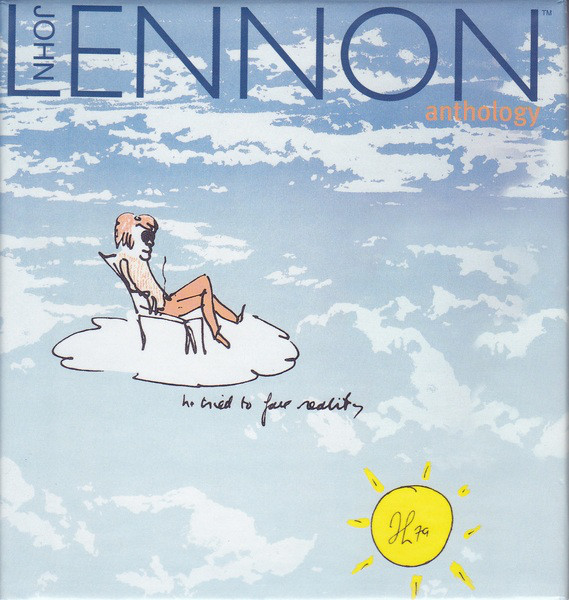
Source: Wikipedia and Humo Photo: Roy Roy Kerwood and album cover
http://www.johnlennon.com/