The birth of jazz almost coincides with that of Nat King Cole. It was 1917 when a new 'jazzy' sound was first reported in the clubs of New Orleans. Just over a year later, Nathaniel Coles was born. Almost parallel to the development of jazz, Nat King Cole's career unfolded, leading him from a budding jazz pianist to an internationally acclaimed crooner.
Nathaniel Adams Coles was born on 17 March 1919 in Montgomery, Alabama. His father, Reverend Edward James Coles, held a key position in the black community of the First Baptist Church. Mother Pearlina was the driving force of the Coles family, which consisted of six children. When the Coles family moved to Chicago, Nat was only four years old. He became acquainted with big city life, learned to play piano at home from his mother, and won his first talent contest with a rendition of the popular 'Yes, We Have No Bananas'. From the age of 12, Nat took classical piano lessons and played classical pieces from Bach to Rachmaninoff.
Baseball
Meanwhile, jazz music from New Orleans had also made its way to Chicago. The young Nat became enthusiastic about all the black jazz musicians and attended as many concerts as possible. He was especially impressed by jazz pianist Earl ‘Fatha’ Hines, whose touch he tried to emulate. It wasn't long before Nat was playing in various jazz bands, including the 14-piece group The Rogues Of Rhythm and his own quintet Nat Coles And His Royal Dukes. Besides being a gifted jazz pianist, Nat also proved to be a talented baseball player. Many clubs from the Negro League showed interest in him. But when it really came down to it, Nat chose jazz music.
King
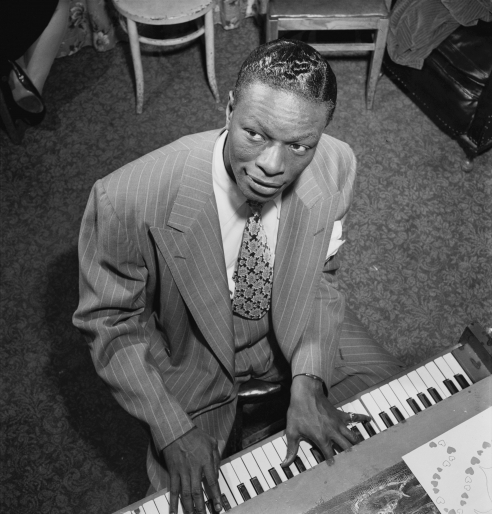
Nat left high school early and joined the Solid Swingers, the band of his eldest brother Eddie, as a pianist. In 1937, both brothers went on tour with the Shuffle Along Revue. During the tour, Nat married Nadine Robinson, a dancer from the revue. It was his first of three marriages in total. The young couple settled on the west coast and took every opportunity to earn money. Nat played in almost every club and beer tavern between San Diego and Bakersfield. In 1938, he was offered a permanent contract as a jazz pianist at the Swanee Inn, a nightclub in Los Angeles. He played brilliantly and the club owner placed a paper crown of gold on his head. From that moment on, he was called 'the king', Nat 'King' Cole.
Voice
In 1941, Nat travelled with guitarist Oscar Moone and bassist Wesley Prince to New York, where The King Cole Trio performed in both black and white jazz clubs. When America became involved in the Second World War in 1942, the members of the trio were called up for military service. Nat was rejected but his bassist was not. Hard times followed, but Nat kept his spirits up. He formed a new trio and began to cautiously discover his voice. Although Nat himself was not convinced of his vocal performances, others felt he had a warm and romantic voice.
Nelson Riddle
This led to a recording contract with Capitol Records, where they saw Nat King Cole as a bridge builder between white and black music. That expectation was fulfilled. From 1944, Nat King Cole scored one hit after another to his own surprise. Most of these became true classics such as 'Let’s Fall In Love', 'Stardust', 'Answer Me My Love' and the big band recorded 'When I Fall In Love'. Nat King Cole was also one of the first artists to record with the famous orchestra of Nelson Riddle.
Natalie Cole
In 1951, Nat King Cole recorded the beautiful 'Unforgettable' with Nelson Riddle, a song that inspired Frank Sinatra's fruitful collaboration with Riddle. Forty years later, Nat King Cole even scored a posthumous worldwide hit with it. This happened when Natalie Cole, his daughter from his second marriage to singer Maria Ellington, reworked and released the song as a tribute to her father.
Unforgettable
On 15 February 1965, Nat King Cole died from the effects of lung cancer. Cole, who was a heavy smoker and smoked an average of three packs a day, was only 45 years old. His legacy consists of various films and TV shows, dozens of albums and hundreds of romantic songs, all sung with that one unforgettable voice. A royal voice with which Nat King Cole managed to touch both the black and white populations of America and the rest of the world.
Top 2000
In the 23rd edition of the Top 2000, Nat is not to be found.
Sunday Morning Classic: Unforgettable
On Sunday 29 May 2022, Nat appeared on stage as Sunday Morning Classic with the album Unforgettable.
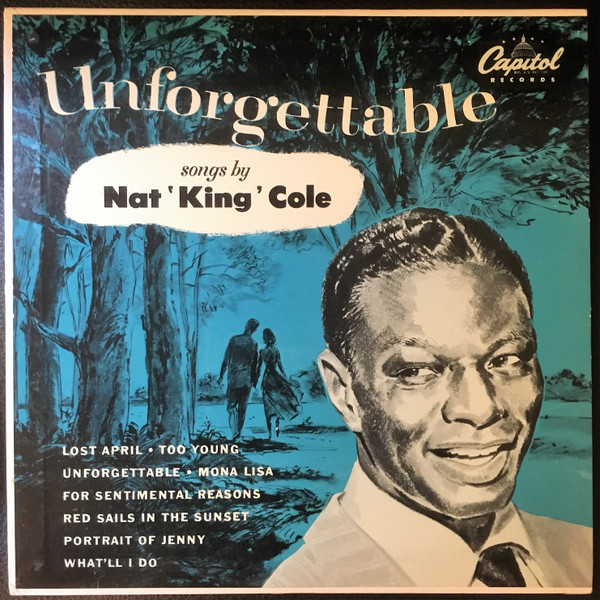
Unforgettable contains various singles that Nat made from 1946 to 1952. This album is very popular because it contains some of his big hits. The nice thing about it is that you hear the hits in their original form, not the 1961 remakes that are usually played on the radio.
Nat King Cole emerged in 1952 as a great pop vocal stylist and enjoyed a series of hit singles and albums, but Unforgettable is perhaps Nat at his early peak. With romance as the key word, he slides through some of his best-known ballads, including 'Portrait of Jennie', 'Mona Lisa', 'I Love You (For Sentimental Reasons)' and of course Unforgettable. There are quite a few lesser-known but attractive songs, plus a handful of “standards” ('What'll I Do?' is certainly a keeper) on this interesting Sunday Morning Classic. Nelson Riddle's Orchestra provides demanding strings and Cole's voice practically embodies the emotion of love.
The very artistic, almost surreal three-dimensional white, charcoal black and royal blue tinted front cover of the album is beautiful and reflects a period defined by its simplicity. Unforgettable belongs alongside albums by Frank Sinatra, Ella Fitzgerald and Peggy Lee as the defining pop music of that time.
Source: NPO and various websites Photo: William P. Gottlieb
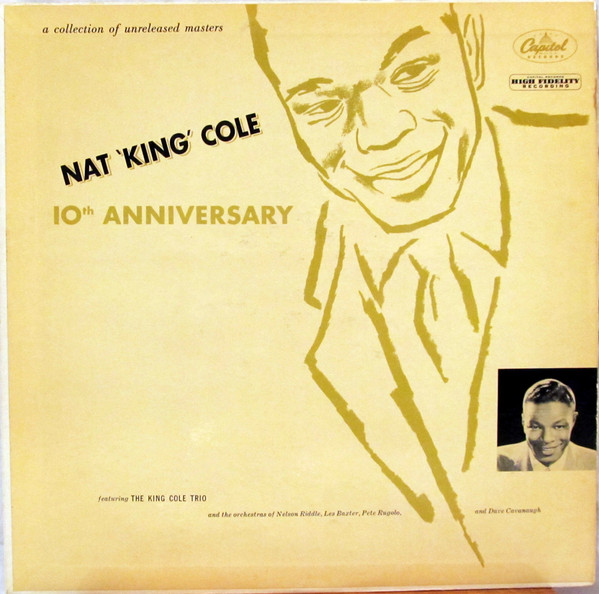
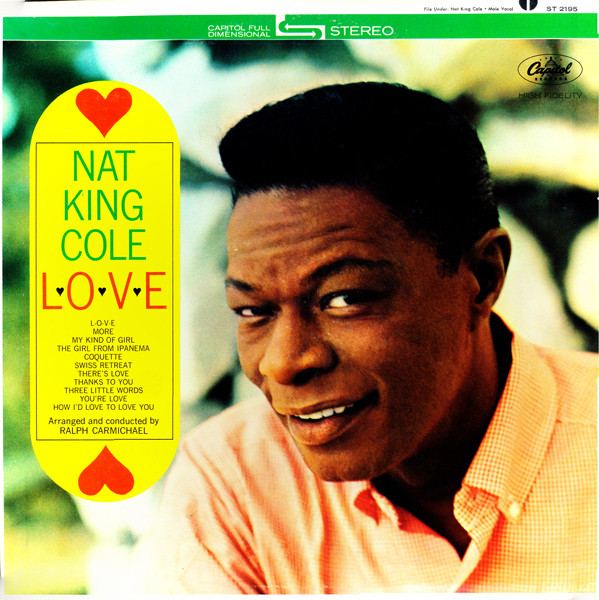
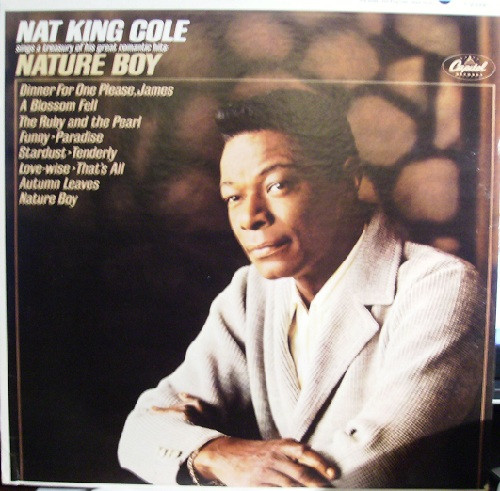
Below you will find some albums by Nat King Cole. If you are looking for a particular album, please let us know.