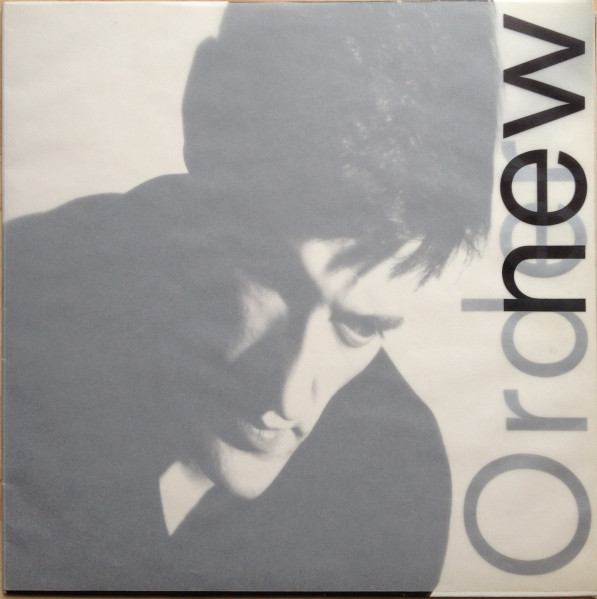
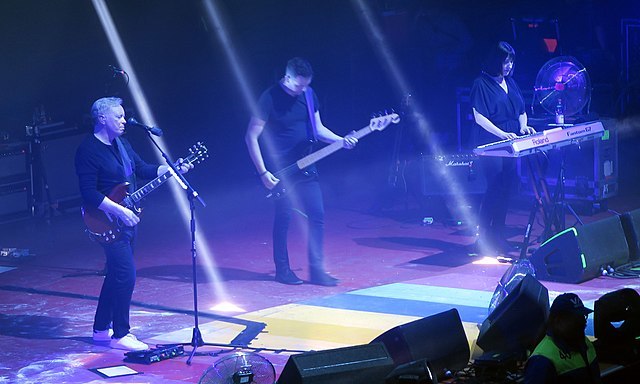
New Order is an English new wave band from Manchester, formed in 1980 from Joy Division following the suicide of their frontman Ian Curtis. The original members of New Order, Bernard Sumner (lead singer), Peter Hook (bassist), and Stephen Morris (drums, percussion and electronics) all came from Joy Division, which was disbanded after Ian Curtis's death. In October 1980, the band was joined by Gillian Gilbert (guitar/synthesizer), Morris's wife. In 2001, Gillian Gilbert left the group to care for her ill daughter and was replaced by Phil Cunningham. In 2007, Peter Hook left the band and was succeeded in 2011 by Tom Chapman. Guitarist/keyboardist Gillian Gilbert also returned to the band in 2011, making New Order a five-piece group.
New Order initially continued the path set by Joy Division with melodic, dark songs. At first, they were considered rather eccentric and stubborn. For example, they gave no interviews, refused to play encores, and completely distanced themselves from the Joy Division repertoire. Soon they found their own sound. New Order grew into an icon of new wave and the alternative scene. They have had a great influence on techno. They themselves found inspiration in, for example, Kraftwerk.
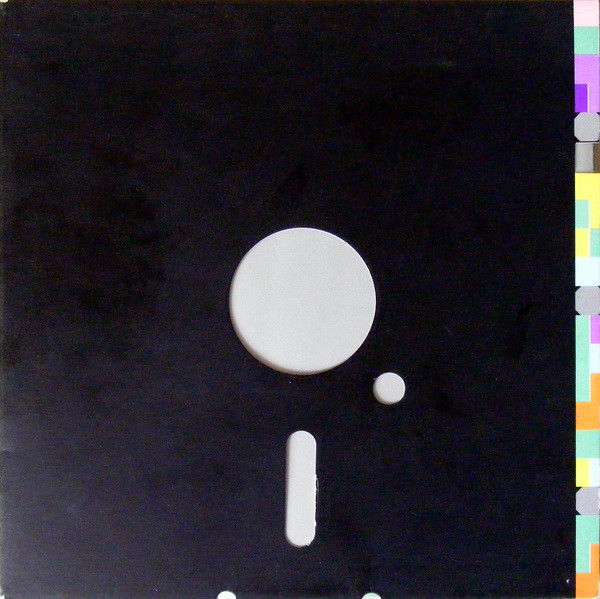
Their 12" Blue Monday is the best-selling 12" single of all time. The packaging resembled a large 5¼" floppy disk. This was very labour-intensive, so (according to the band) money had to be lost on every copy. The single, with a length of almost seven and a half minutes, is a remarkably long track to reach the charts. Due to its length, the track was only released on 12" single and not on the conventional 7" single. Although the track was originally intended only for DJs in dance clubs, it became an unexpected commercial success. The single sold 1.16 million copies in the United Kingdom.
Top 2000
Blue Monday is number 399 in the Top 2000 edition 2019.
Sunday Morning Classic: Blue Monday
On 22 November 2020, Blue Monday was on the turntable as Sunday Morning Classic.
In 1983, suddenly there was a 12-inch with futuristic dance music from New Order. While the music of the band from which New Order originated almost collapsed under its own doom, Blue Monday seemed to advocate dancing on the volcano. The same primal feeling as Joy Division, but through the execution, relatively, happier and more optimistic.
I don't know how it was in other countries, but in the Netherlands the track caused quite a stir. Joy Division had meanwhile been declared sacred and the ‘people with good taste’ (read: music snobs) considered Blue Monday (of course) a musical sell-out. Stung like wasps, they reacted to the electronic tones of the latest New Order.
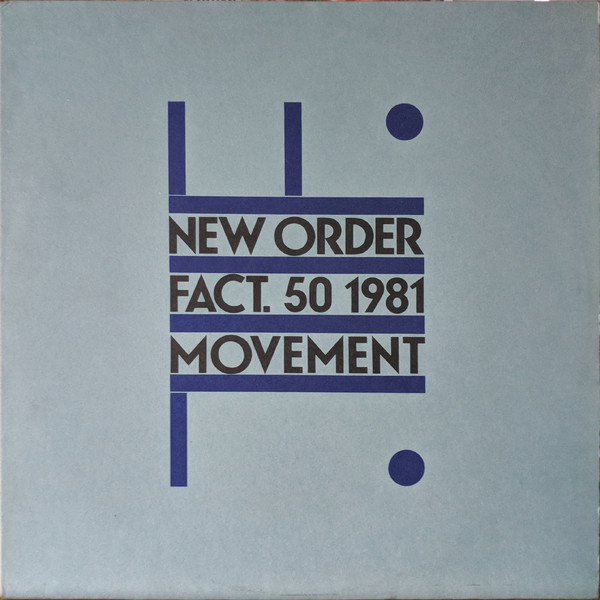
New Order’s first album, after Ian Curtis’s premature death, was Movement, an album that stayed close to the Joy Division sound. But now? Disco!? I still remember discussions on the radio about whether that track should be played on certain radio stations (VARA and VPRO), because this just couldn’t be…
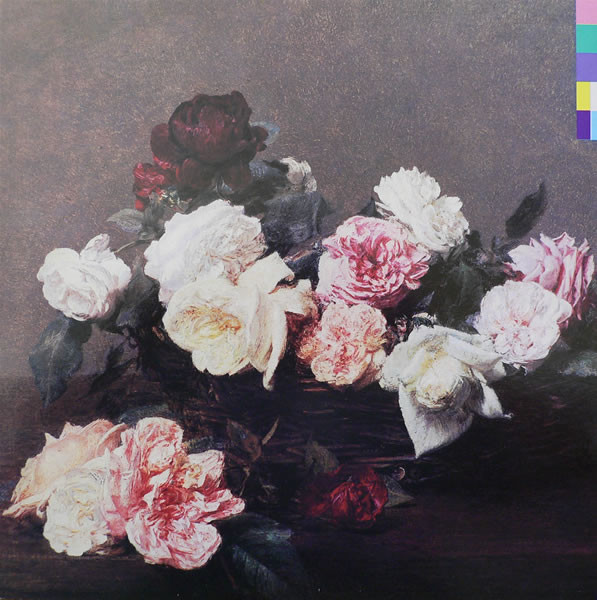
During concerts, the band did not do encores. The audience everywhere reacted the same way: disappointed and often irritated. The idea was to record a track that could be played as an encore. The band would come on, press Play and leave again. Then the track would be played. Gradually, however, the band became increasingly enthusiastic about the track. It became the next single, which would be released before the next album, Power, Corruption & Lies, appeared.
According to Bernard Sumner, Blue Monday was influenced by Dirty Talk by Klein + M.B.O., Our Love by Donna Summer and Geiger Counter by Kraftwerk. The choir heard in Blue Monday is a sample from Kraftwerk’s Uranium. Maybe The Perfect Kiss from 1985 is better, but the impact of Blue Monday was huge. Something different, something new happened. Dance music, but still different. The overall feeling of the track was double. Melancholy and festive at the same time. The doom sound in the vocals referred back to the Joy Division days, but musically it also recalled the happy carefree times of the 1970s and the disco of those days.
The beginning of the track is still impressive. The 4/4 time and that bass drum that sounds like a machine gun. The music that slowly builds up, the beautiful bassline, both from the Moog Source and Peter Hook. Blue Monday is the best-selling 12-inch of all time. Strikingly, the track was not part of the album Power, Corruption & Lies, which was released on 2 May 1983.
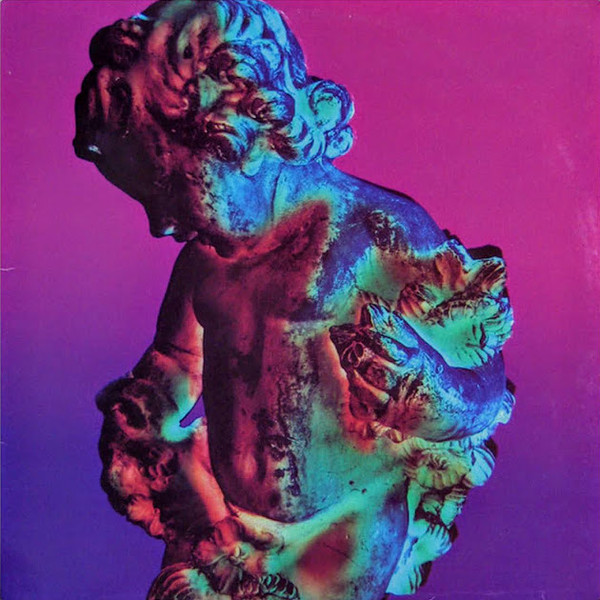
Also the iconic cover of Blue Monday, designed by Peter Saville and Brett Wickens, is beautiful. Peter Saville got the idea when he saw Stephen Morris fiddling with floppy disks (where the sequencer information was stored). The cover had to look like a 5¼” floppy disk. The front contains no words, but does have the artist, track and label information in (coloured) code blocks.
The track has been released three times. The original from 1983 (with The Beach as B-side), followed in 1988 by Blue Monday ’88, remixed by producer Quincy Jones. Blue Monday ’95 was the third version. The lyrics of Blue Monday are said to be about saying goodbye. The almost monotone delivery by singer Sumner gives the lyrics (and the track) a detached feeling.
By A Pop Life (Erwin Barendregt) in Review
Photo: RL GNZLZ from Chile