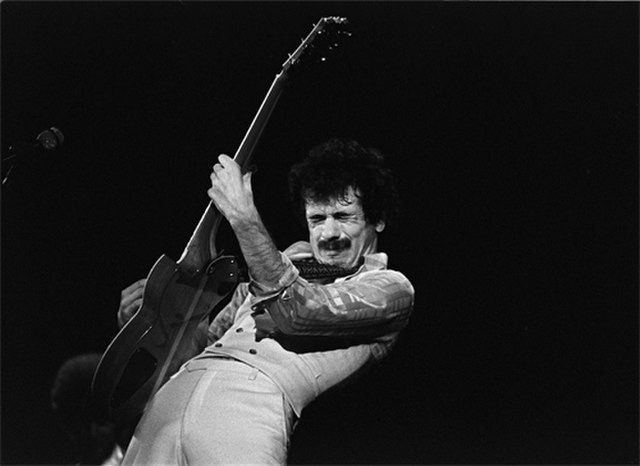
Carlos Santana was born on 20 July 1947 in Autlan de Navarro, Mexico. As a young boy, he was instilled with a love for music by his father José, a mariachi violinist. In 1955, the Santana family moved to the Mexican border town of Tijuana, where the young Carlos learned to play guitar, particularly influenced by blues guitarists such as B.B. King and John Lee Hooker. Through performances with local bands, he began to discover and perfect his own musical style. In the early sixties, Santana moved to the Bay Area, the Spanish-speaking part of San Francisco. The city was a colourful mix of cultural, political and artistic influences, where the musician felt very much at home. In 1966, he debuted with the Santana Blues Band. The mix of rock, blues, South American rhythms and world music influences proved a hit. The band was quickly disbanded because the frontman suffered from tuberculosis.
Woodstock
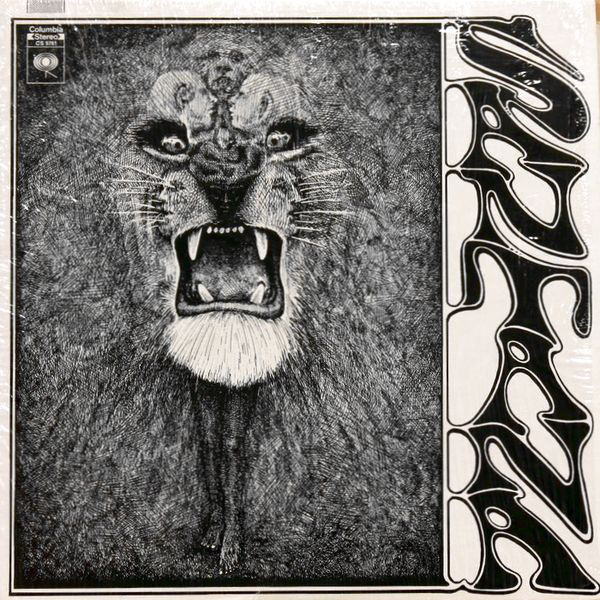
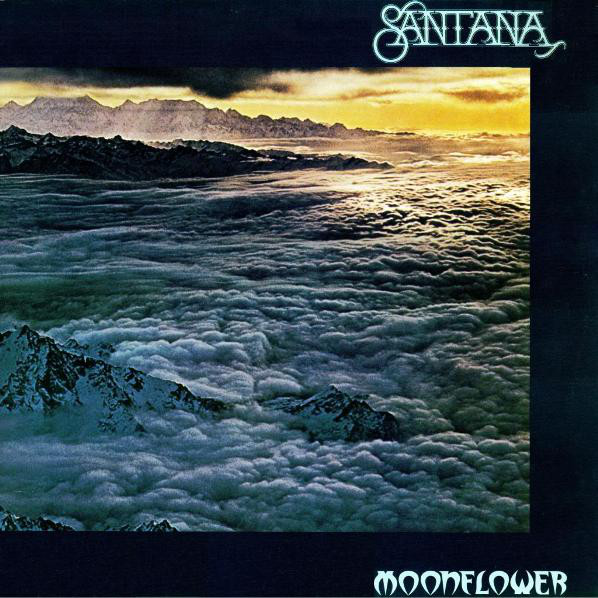
However, in 1969 Santana appeared with an entirely new line-up on the main stage of the legendary Woodstock festival. The successful performance earned the band named after Carlos Santana a record deal. With their eponymous debut album, the band broke through internationally. The LP reached fifth place in the Netherlands and earned Santana three hit singles that year: Jingo, Evil Ways and Soul Sacrifice. During the seventies, seven more Santana singles reached the charts, including Oye Como Va, Samba Pa Ti and She’s Not There. Almost all albums sold so well that they reached the top 10, sometimes even two within a year. Band members Neal Schon and Gregg Rolie left in 1973 to form the hard rock band Journey, known for the hit Don’t Stop Believin’. The Santana albums Amigos (1976) and Moonflower (1977) reached second place in the sales charts. They were kept from the top spot by The Rolling Stones and Tol Hansse respectively. Santana played at Ahoy in 1971, 1973, 1975 and 1976.
Carlos Santana solo
Carlos Santana was also successful as a solo artist. In 1972, a live album with Buddy Miles was released, and in 1983 Havana Moon hit the shops, featuring the top 10 hit They All Went To Mexico, with vocals by country star Willie Nelson. In 1987, he recorded the personal album Blues For Salvador. During this period, he and his band abandoned the familiar and beloved Santana sound, resulting in the radio hits Hold On and Say It Again. However, album sales began to decline sharply, and the group was absent from the charts for some time after 1985. Nevertheless, the band around the Mexican guitar guru remained popular enough to fill Ahoy in 1981, 1983, 1987, 1992, 1994 and 1998. We find Carlos Santana as a guest musician on John Lee Hooker’s top 10 hit The Healer in 1990. The double CD The Ultimate Collection was an unexpected success in 1997 and Santana’s first top 10 album entry in nineteen years.
Comeback with Supernatural
After several poorly selling albums in the nineties, record boss Clive Davis of Arista Records believed he could put Santana back on the map. He signed the band and supervised the work on the album Supernatural. On it, the guitarist collaborated with artists such as Lauryn Hill, Dave Matthews and Eric Clapton. The album was released in the summer of 1999 and was an immense success. With Matchbox 20 singer Rob Thomas, the band scored a hit for the first time in fourteen years with Smooth. The next single became Santana’s biggest hit ever: Maria Maria, produced by Wyclef Jean, with vocals by The Product G&B. In the Netherlands, the single reached second place, behind Freestyler by Bomfunk MCs. The album earned Santana no fewer than nine Grammy Awards and topped the Dutch Album Top 100 for six weeks.
Collaborations
In an attempt to repeat the success of Supernatural, Santana released two similar albums, namely Shaman in 2002 and All That I Am in 2005. Despite collaborations with major artists such as Seal, Dido, Steven Tyler, Mary J. Blige, Will.i.am, Chad Kroeger and Joss Stone, the group failed to match the sales results of its predecessor. The song The Game Of Love with Michelle Branch was a minor hit in the autumn of 2002. The last time we find Carlos Santana in the charts is in 2006, as a guest musician on Shakira’s single Illegal. In the following years, Santana continued to release new albums regularly and the band occasionally performed in the Netherlands. Santana played at the Gelredome and twice at the Ziggo Dome. In 2016, after a fourteen-year absence, Santana returned to the top 10 of the Album Top 100 with Santana IV, the first long player with the original line-up since 1973. Three live albums by Santana were released during the coronavirus pandemic.
Top 2000
In the 2020 Top 2000, Santana appears with 5 entries. The highest ranking is Samba Pa Ti at number 489.
Sunday Morning Classic: Abraxas
Santana naturally belongs in the list of lists and on 10 October 2021, the album Abraxas was on our turntable as Sunday Morning Classic.
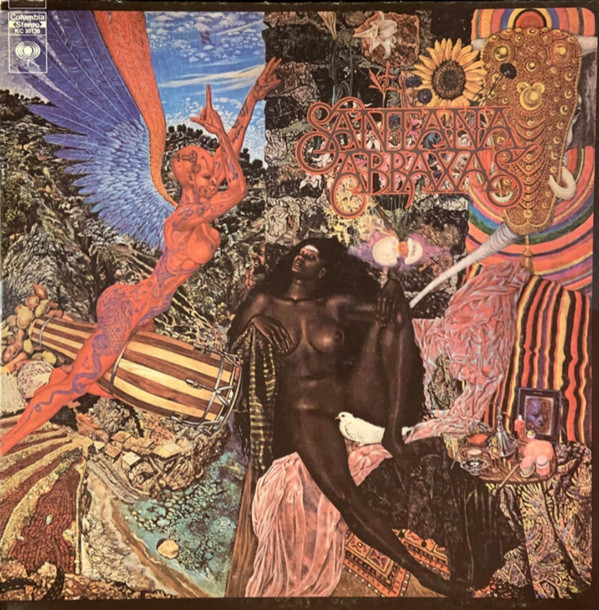
It is the second (studio) album by the original (and probably also most powerful) Santana line-up. It brought the band their commercial breakthrough. The album contains two of the group’s biggest hits: Black Magic Woman, a smooth, slick interpretation of the song written by Fleetwood Mac’s Peter Green, and their version of Tito Puente’s Oye Como Va, where Carlos Santana’s sharp guitar playing leads to a rolling salsa groove. The group’s unique, genre-crossing approach made these singles – and the rest – something never heard before. All the elements that made Santana’s eponymous debut (1969) so stunning are also present here: rolling, polyrhythmic percussion, packed pancultural influences, virtuoso guitar work. Only now sharpened and coloured with the intoxicating San Francisco sound of the late sixties. Abraxas remains an essential Latin-rock release, and one of the undisputed classics of that era.
source: Wikipedia, NPO and Muziekweb
photo: David Gans