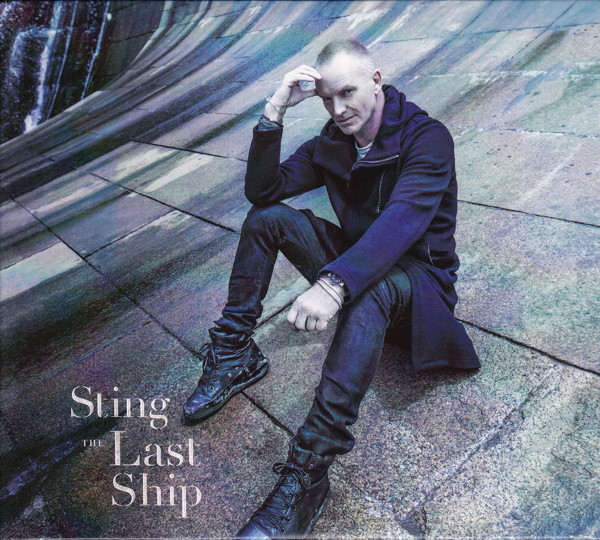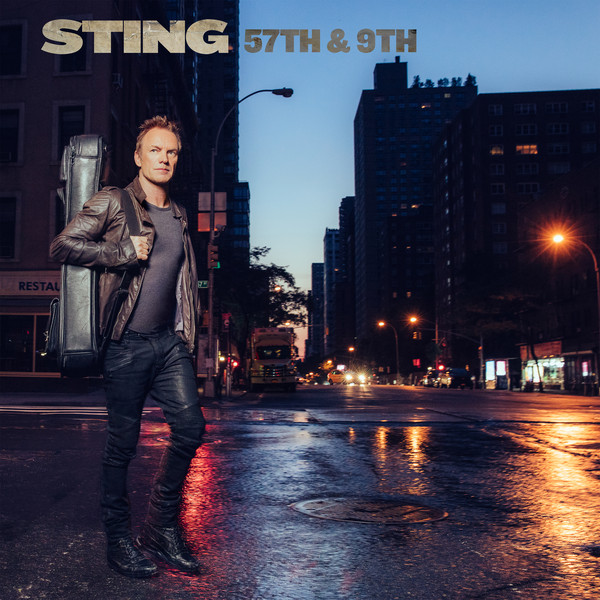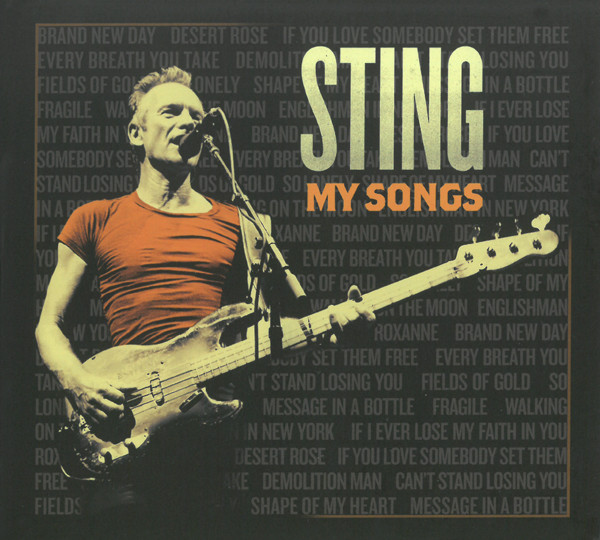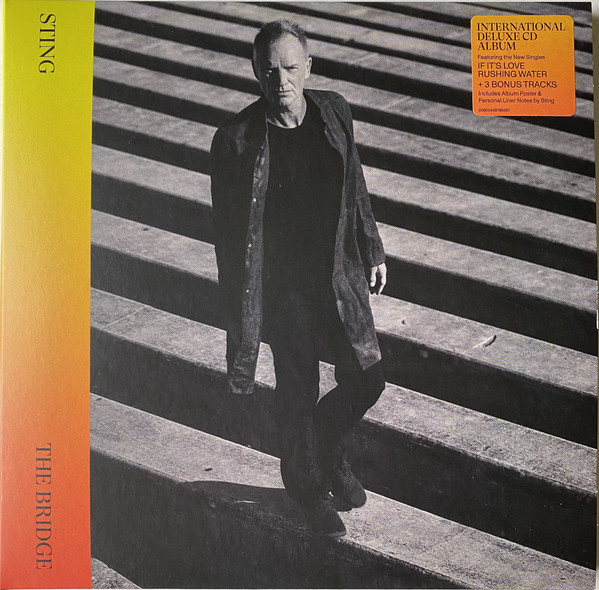
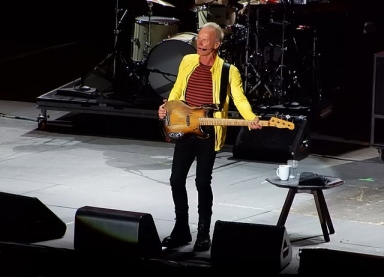
It's quite a story, but in 2008 during Bospop I briefly stood at the back of the stage with Sting. Really just for a moment, because I was quickly sent away by a man who looked very threatening. If you want to hear the story, I'd be happy to tell it to you sometime. Through the gate next to the stage, I then found myself in the front row with Sting just a few metres away. Enjoyed a wonderful performance in the rain!
Sting
Sting, stage name of Gordon Matthew Thomas Sumner (Wallsend, 2 October 1951), is a British musician and singer. He is a Commander of the Order of the British Empire; this honour was bestowed upon him by Queen Elizabeth II.
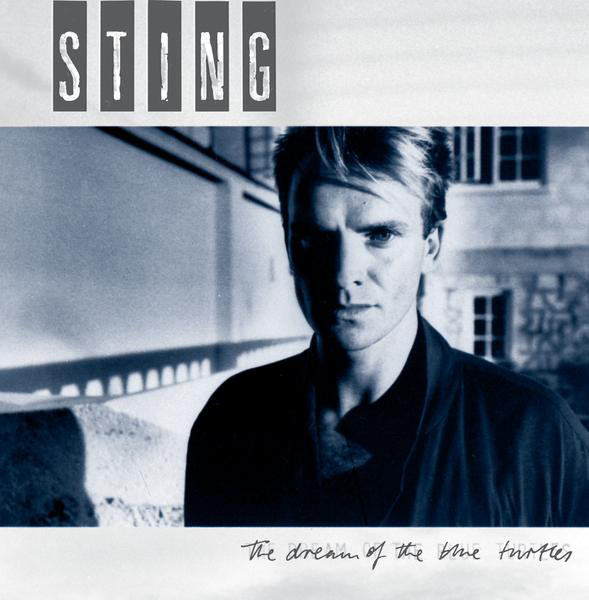
Sting broke through to the mainstream public with the band The Police but went solo in the mid-eighties. As a solo artist, he fused influences from jazz, classical music and world music into his own songs. His lyrics are literary and contain meaningful messages. He often emphasises this himself in the press. The nickname Sting was given to him early in his career when he was a bassist in a jazz band he regularly performed with in Newcastle. At that time, he often wore a black and yellow striped jumper, which made his fellow musicians think of a bee. Since then, he has only used his real name on official occasions. He first became globally known as the bassist and singer of The Police, which he formed together with drummer Stewart Copeland and guitarists Henry Padovani and Andy Summers. Even before The Police effectively disbanded at their peak in 1984, Sting began working on his first solo studio album The Dream of the Blue Turtles (1985). The first single from this album was If you love somebody set them free.
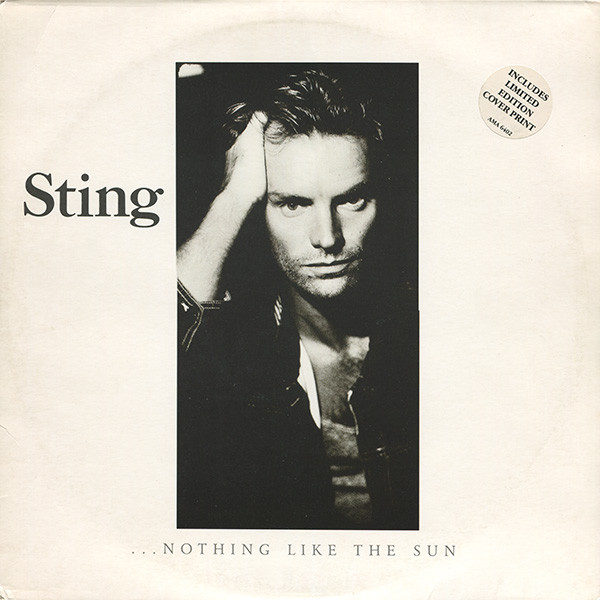
In 1984, Sting participated in Band Aid, the proceeds of which went to fighting hunger in Africa. He performed at Live Aid in 1985 and also at Live 8 in 2005. Shortly after the release of "Nothing like the Sun," Sting became further involved with Amnesty International. He also committed himself to nature conservation – he founded the Rainforest Foundation to raise awareness for the Brazilian rainforest. In 1997, Sting performed at the Royal Albert Hall for a good cause: helping the people of Montserrat. He played the song Hey Jude with, among others, Paul McCartney, Elton John, Eric Clapton, Mark Knopfler and Phil Collins. With his band The Police, Sting performed at Live Earth in 2007 to raise awareness of climate change. The Police also donated an amount in 2008 for the planting of new trees in New York: MillionTreesNYC. In 2008, Sting and other well-known artists from the US, the United Kingdom, Canada and South Africa worked on the album Songs for Tibet, a tribute to Tibet and the Dalai Lama Tenzin Gyatso.
Sting has been nominated several times for the Grammy Awards. In total, as a musician (including his time with The Police), he has received sixteen Grammy Awards. He has also won a Golden Globe, an Emmy Award and has been nominated several times for the Oscar for Best Original Song. In June 2017, Sting received the Polar Music Prize. He decided to donate the prize money to a Swedish organisation that helps young refugees integrate through music.
Top 2000
In the 23rd edition of the Top 2000, Sting is listed with the following entries:
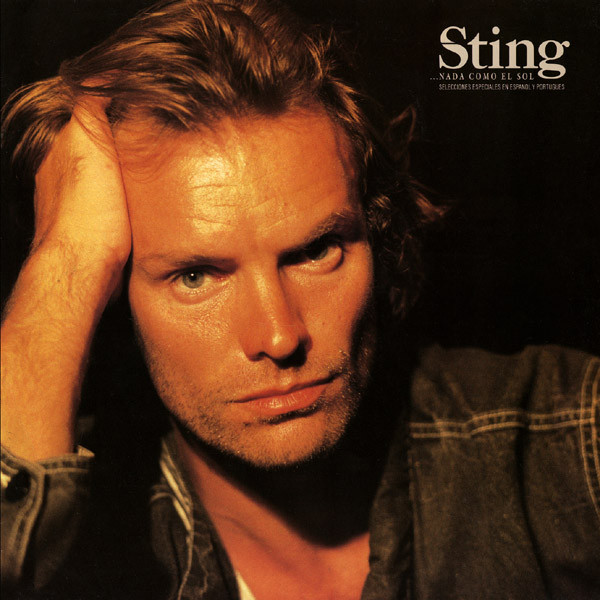
Sunday Morning Classic: Nada Como El Sol
On 20 September 2020, Sting was our guest as Sunday Morning Classic with the fantastic album Nada Como El Sol.
"Nothing Like the Sun" was a successful solo album for Sting in 1987, and his 1988 release "Nada Como El Sol" gave listeners the chance to hear five songs from that album in Spanish or Portuguese. The album "Nada Como El Sol" manages to offer an interesting variation on work that is probably already familiar to many listeners in English.
"Mariposa Libre" ("Little Wing"), a cover of the Jimi Hendrix classic, has quite a power ballad quality and a plaintive vocal line; the rendition seems somewhat softer than Hendrix's original, but I appreciate anyone who has the courage to attempt a Hendrix cover.
"Fragil" ("Fragile") (the only Portuguese-language song on the album) is calm and dignified, with skilful guitar work. Beautiful fingerpicking and wonderful voice and lyrics. The ideal song for the right mood or occasion.
It is my favourite song on the album, but perhaps that is partly because I listened to it during my travels in Portugal.
He wrote the song following the murder of Ben Linder, who volunteered in Nicaragua and was killed there by the Contras. It is a song about violence and the fragility of life in the face of terrorism, guns and bullets.
"Si Estamos Juntos" ("We'll Be Together") will certainly take you back to the late 80s: the electric piano, a synthesiser bass and the generally upbeat tempo of the song will be familiar, but it is still a clever and energetic song, and the Spanish-language version gives it a fresh and new quality.
"Ellas Danzan Solas (Cueca Solas)" "They Dance Alone" is gentle and unfolds in a suitably gradual and relaxed way, with a spoken word interlude. Go to Wikipedia if you want to know how Sting's human rights work in the late 80s inspired this song, with its moving references to the "disappeared" human rights activists of Pinochet's Chile, and to the still ongoing grief of the families of the "disappeared."
"Nada Como El Sol" is a well-executed project – the translations are good and Sting manages the Spanish and Portuguese pronunciations well. But unless you are a big fan, or enjoy hearing songs sung in different languages, this is an album you can skip.
Source: Jan Liebregts and Wikipedia Photo: Tilly Antoine and Ralph_PH