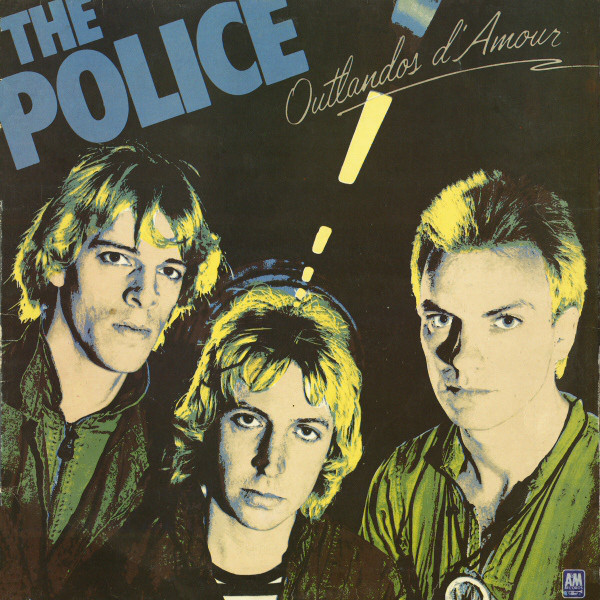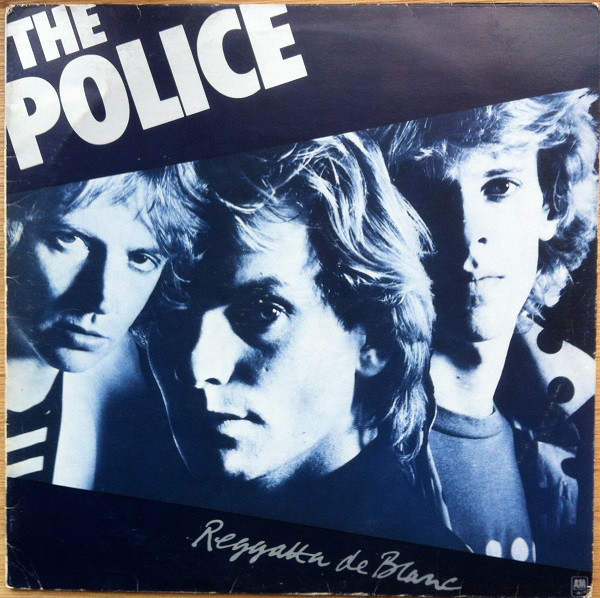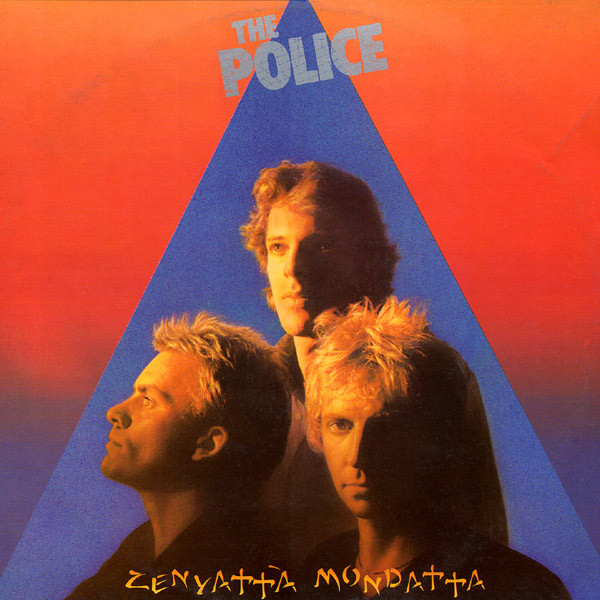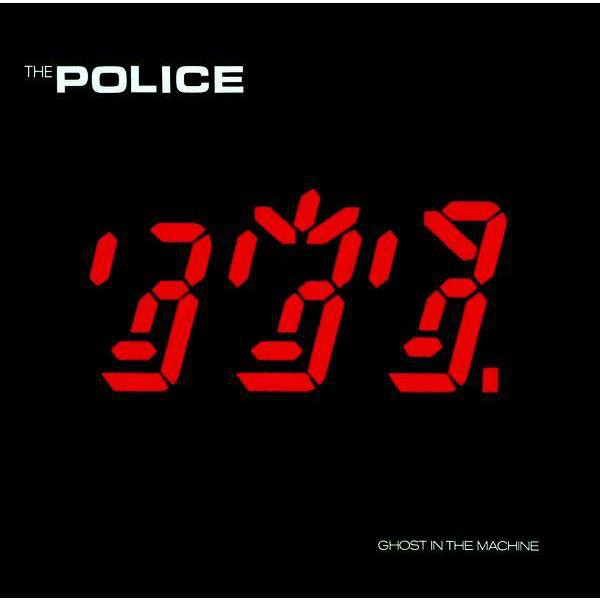
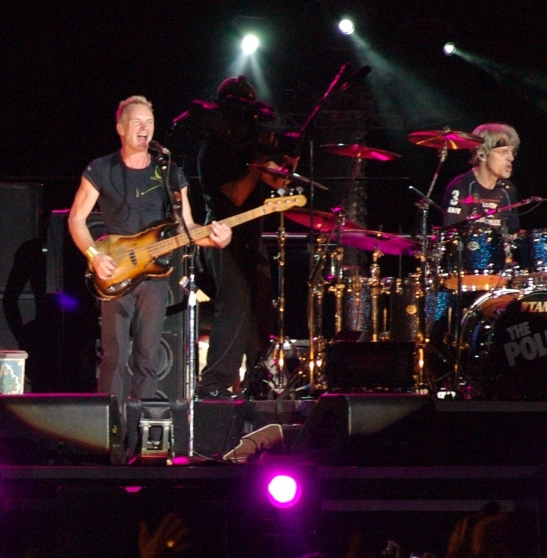
Sometimes you're incredibly lucky when a band decides to get back on stage together. On 13 September 2007, The Police came to the Amsterdam Arena and luckily I had tickets! So there I was, together with my sister, brother-in-law and friend Anton Jan, going wild right in the middle of the field.
Rio Rio Rioo Rio Rio Rioo Rio Riay Riayo Rio Riay Riayo Rio Riay Riayo Rio Riay Riayo Rio Riay Riayo…
The Police
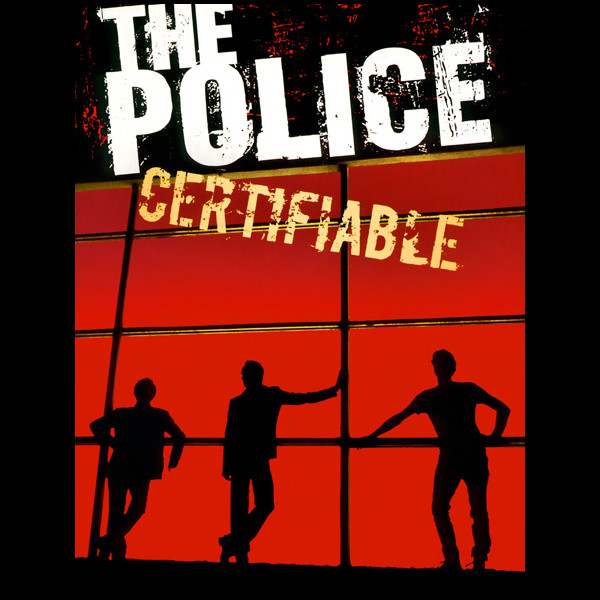
The Police was an English rock band formed in London in 1976, but active from 1977. For the majority of their history, the band consisted of Sting (lead singer, bass), Andy Summers (guitar) and Stewart Copeland (drums). The Police became globally popular in the late seventies and are generally regarded as one of the first new wave groups to achieve success with the general public. The group disbanded after the Synchronicity Tour – which ended on 4 March 1984 in Melbourne, Australia – but reunited in January 2007 for a one-off world tour that lasted until August 2008. The Police sold more than 75 million albums worldwide.
The 24-year-old Curved Air drummer Stewart Copeland started forming a new band on 25 September 1976 and already had a name: The Police. Copeland wanted The Police to participate in a new movement in pop music: punk rock. On that day in 1976, he had seen the 24-year-old Sting for the first time at St. Mary's College in Newcastle upon Tyne, performing with the jazz-rock band Last Exit, and thought of him to play in his new group. The third member was Henry Padovani, a 24-year-old Corsican who moved to London on 8 December 1976. The first rehearsals of The Police were in Copeland's flat in Mayfair on 12 January 1977. On 12 February 1977, The Police recorded their first single, Fall Out, at Pathway Studios in London for £150, with Nothing Achieving on the B-side. The debut single of The Police was released on 1 May 1977 by Illegal Records. Initially, Copeland wrote all the songs, including these two; later, the band's lyrics would mainly come from Sting.
The group broke through worldwide in the late '70s with classics such as: Fall Out, So Lonely, Roxanne, Can't Stand Losing You, Message in a Bottle, Walking on the Moon, Bring on the Night and The Bed's Too Big Without You. Don't Stand so Close to Me, De Do Do Do, De Da Da Da, Every Little Thing She Does Is Magic, Spirits in the Material World, Invisible Sun, Secret Journey, Every Breath You Take, Wrapped Around Your Finger, King of Pain, Synchronicity II and Don't Stand so Close to Me '86 followed.
At Sting's insistence, the band was active again in 2007 and 2008 in a reunion tour to celebrate the thirtieth anniversary of The Police. Initially, Stewart Copeland and Andy Summers were reluctant, but when Sting proposed to split the income equally, they joined his enthusiasm. In the past, Sting earned more than the other band members as a composer (he wrote most of the songs and thus received more income from royalties). This world tour started in Vancouver, Canada on 27 May 2007; on 13 and 14 September 2007, The Police gave two performances in the Amsterdam ArenA in the Netherlands. Fiction Plane, the band of Joe Sumner, Sting's son, was the support act.
Sunday Morning Classics: Synchronicity
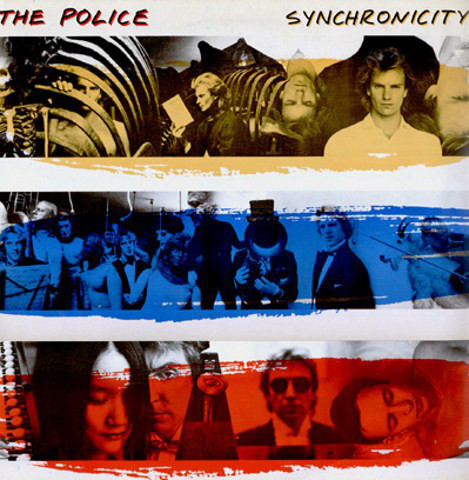
On 29 September, the album "Synchronicity" was on the turntable during our Sunday Morning Classics.
Synchronicity is not only the term Carl Gustav Jung gave to the phenomenon of events that unintentionally occur at the same time. It is also the title of the fifth studio album released by the British band The Police in 1983.
At that time, Sting was very impressed by the writer Koestler, whose work included Jung's ideas. Synchronicity bears no resemblance to the band's first three albums. The old reggae and new wave-based sound has disappeared and it is more of a transitional album between the fourth, Ghost In The Machine with its jazzy brass and synthesiser sounds, and Sting's first solo work.
Synchronicity is a work of sunny pop melodies with ominous sound effects. Sharp verses deal with the day of judgement. Synchronicity, The Police's fifth and best album, is about things ending: the world in danger, the failure of personal relationships and marriages, the death of God.
Throughout the LP, these ideas reflect on each other in echoing, overlapping voices and instrumentation. "If we share this nightmare, then we can dream," Sting announces in the title track, a ringing collage of guitar, percussion and voices that evokes the turmoil of the world.
Although The Police started as uncomplicated pop-reggae enthusiasts, they have now assimilated it so thoroughly that only different variants of reggae-like syncopations remain. The Police and co-producer Hugh Padgham have transformed the ethereal sounds of Jamaican dub into chilling, standalone atmospheres. More so than on the haunting Ghost in the Machine, every version of Synchronicity is not just a song, but a miniature, discrete soundtrack.
To prove that The Police were still a band, one song each from Stewart Copeland and Andy Summers was added. Although the hits are among Sting's best, they also illustrate that he was ready to leave The Police behind for a solo career, and that is exactly what he did. A beautiful document of the times, of which side two alone is worth more than the purchase price.
Source: Wikipedia and Jan Liebregts Photo: Beatrice Murch, album cover selfportrait