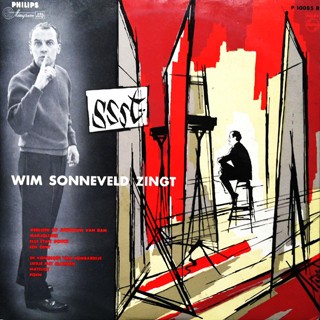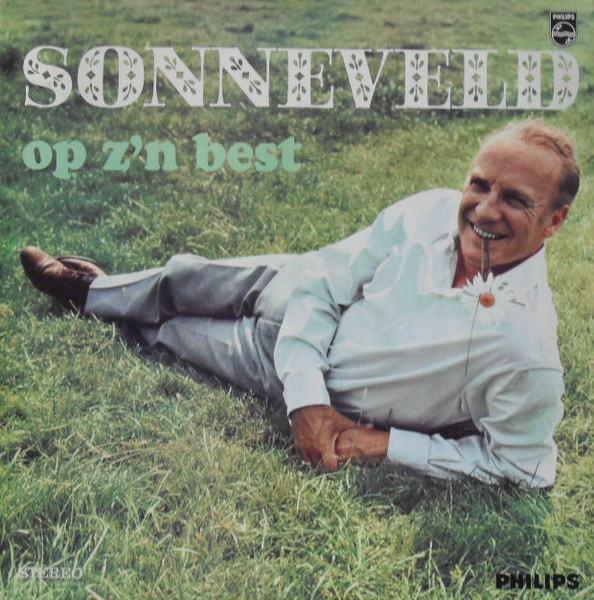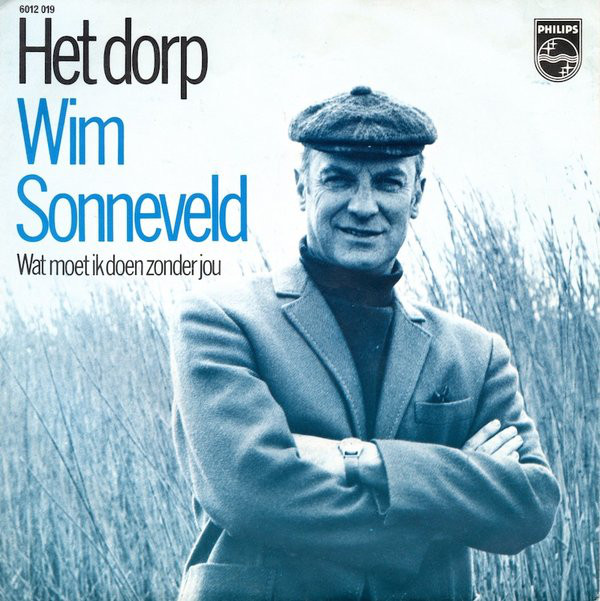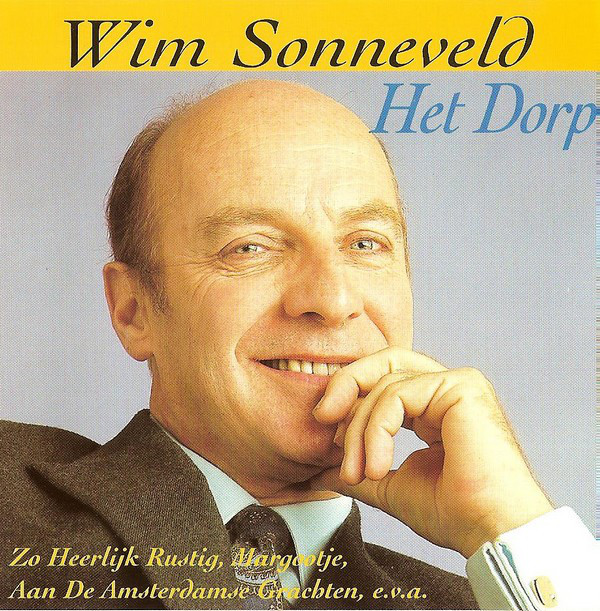
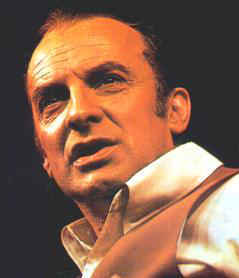
In 2019, Wim Sonneveld's "Het Dorp" was voted the most beautiful song in the Netherlands, and perhaps rightly so. For years I was able to sing every word along and knew it completely by heart. It is a feeling of wistfulness that this song evokes. Beautifully, the song was written in 1965, the year I was born.
Wim Sonneveld
Willem (Wim) Sonneveld (Utrecht, 28 June 1917 – Amsterdam, 8 March 1974) was a Dutch cabaret artist, singer and actor. He is considered one of the "Big Three of Dutch cabaret" after the Second World War, alongside Toon Hermans and Wim Kan.
Wim Sonneveld was born in Utrecht as the son of grocer Gerrit Sonneveld and Geertruida van den Berg. In 1922, he lost his mother at a very young age. After a school period in which he was always the class clown, he had a number of rather unsuccessful jobs.
In 1932, he started singing with the amateur singing group the Keep Smiling Singers, after which in 1934 he formed a duo with Fons Goossens and performed at anniversary celebrations of associations and institutions. Later that year, he met Huub Janssen, with whom, after a trip through France in 1936, he went to live in Amsterdam, first at the Westermarkt, later on the Prinsengracht. In that same year, he became secretary-administrator for Louis Davids, where he was also allowed to play small roles and sing chansons. During the same period, he performed with his own company De Rarekiek, in which his friend Huub also participated. Sonneveld sang in the France of 1937 in cabarets of Suzy Solidor and Agnes Capri.
After the declaration of war in 1939, he returned to the Netherlands, where he had theatre roles and performed in the revue of Louis Bouwmeester Jr. In 1940, he performed at the Theater der Prominenten and played with De Sprookjesspelers of Abraham van der Vies. Here he met, among others, Conny Stuart. In 1943, he formed his own company, which included Stuart, Lia Dorana, Albert Mol, Joop Doderer, Hetty Blok and Emmy Arbous.
On 20 February 1974, Wim Sonneveld suffered a heart attack in the car, after which he was admitted to a hospital in Amsterdam. After a few weeks of rest, he initially improved and told Henk van der Meijden in an interview that he had plans for the future. For example, he wanted to publish his memoirs (under the title Sonneveld, mevrouw, which would refer to the time he worked in his father's grocery store) and make a long-playing record titled Mijn hart, featuring various songs about the heart. He also wanted to do a programme again in 1975, as he would then have been in the business for 40 years. Another decision he made was that he would never wear a toupee again. On 8 March, the day the interview was published in De Telegraaf, Wim Sonneveld died at the age of 56 from a second heart attack. For the general public, this came as a shock, but those close to him later stated that his death was not entirely unexpected. Sonneveld had been warned earlier by a doctor about his poor heart condition, but the doctors could not find anything concrete. Later, his condition worsened; for example, during the show with Ina van Faassen, he was already lying on a stretcher during the interval.
Sonneveld wrote many songs himself but also called on lyricists. Friso Wiegersma (Sonneveld's life partner) wrote one of Sonneveld's best-known songs, “Het dorp”. A free translation of the French song "La Montagne".
Sonneveld sings emotionally about Wiegersma's "village" upon seeing Deurne, which has been ravaged by progress. The well-known line from the song, And along my father's garden path, refers to the path next to Wiegersma's parental home.
Source: Wikipedia