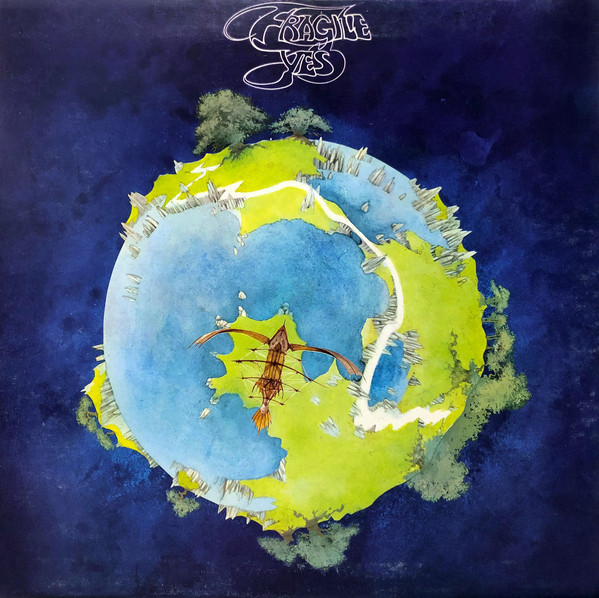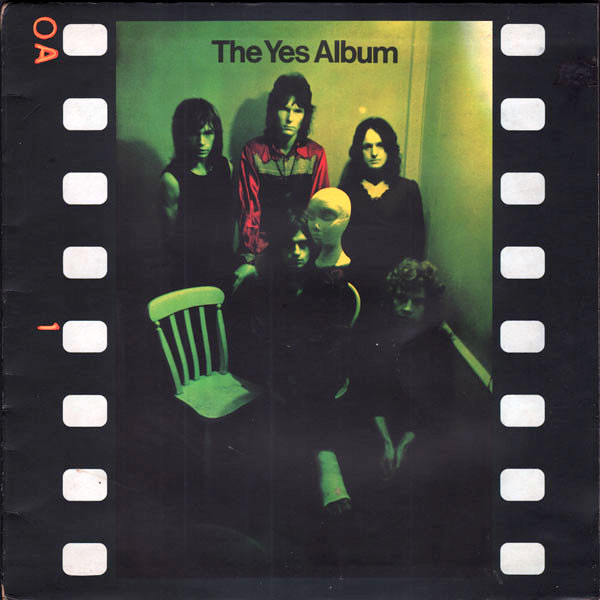
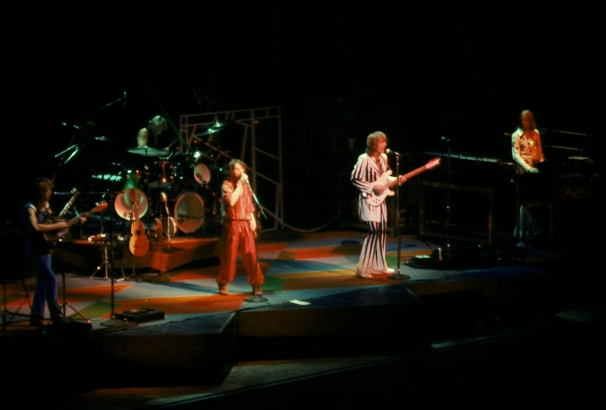
Yes is a progressive rock band, founded in London in 1968. Their music is characterised by complex rhythms and harmonies, the virtuosity of the musicians, multi-part vocals, and mystical lyrics. Some will mention Jon Anderson's high, somewhat angelic singing and Chris Squire's distinctive, heavy bass sound. The mystical aspect of Yes is often emphasised by the many album cover designs created by artist Roger Dean for Yes.
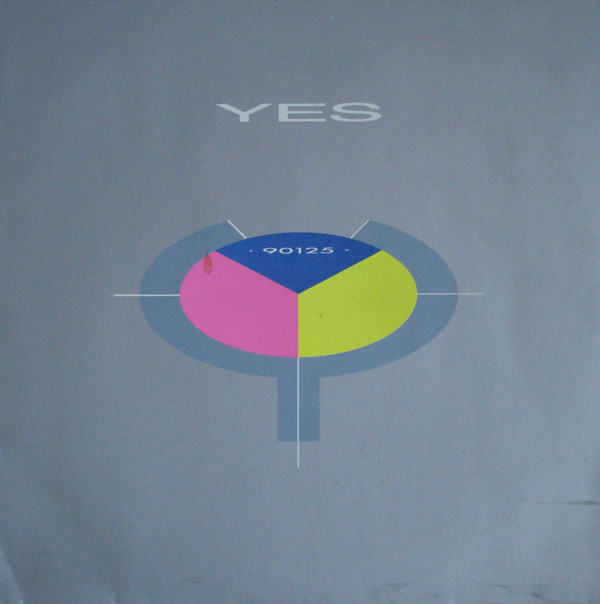
Over the years, Yes has had numerous line-ups. At one point, there were even two groups using the name Yes. After a court ruling, one group (consisting of Squire, Rabin, Kaye, White) was allowed to call themselves Yes, while the other group continued as Anderson Bruford Wakeman Howe. Under that name, they released one self-titled album. Later, these two groups merged, and for a time Yes consisted of eight musicians. Another notable fact is that Trevor Horn, singer and bassist of Buggles, known for hits like Video Killed the Radio Star, took on the vocals for one album, Drama (with some hesitation). After this album and a three-year hiatus of the band, Horn swapped the microphone for the mixing desk to produce the commercially very successful 90125 (a title referring to the catalogue number of this album at Atlantic). Most members who have ever been part of Yes are British musicians, but Yes has also had members from Switzerland, South Africa, the United States, and Slovenia.
According to many fans, the most evocative line-up is the one with Anderson, Squire, Howe, Wakeman, and Bruford, although this is not the original formation of the band.
Jon Anderson
Even during his time with Yes, Anderson was active in solo projects; his first album Olias of Sunhillow was released in 1976. In addition, Anderson regularly contributed to projects by other bands, including King Crimson, Vangelis, Rick Wakeman, Mike Oldfield, Bela Fleck and the Flecktones, Tangerine Dream, Lawrence Gowan, Toto, Kitaro, Peter Machajdík, and Trans-Siberian Orchestra. With Vangelis, he worked on his solo projects, but they also made several albums together as Jon & Vangelis. In 2005, Jon Anderson undertook the Tour of the Universe and also visited his former hometown Tilburg. In March 2007, he returned to the Netherlands for Classics in Rock at Ahoy, taking the opportunity to visit Tilburg again, this time for a workshop. After health problems in 2008, Anderson fully resumed his activities in 2009 with new concerts in various places around the world, especially in the US and Canada.
Top 2000
In the 23rd edition of the Top 2000, Yes is featured with the following entries:
Sunday Morning Classic: 90125
On 8 November 2020, Yes was the guest for Sunday Morning Classic with the album 90125.
An unplanned reformation of Yes in 1983 led to 90125, their most commercially successful album. What became their eleventh studio album was initially intended as the debut album for a new rock trio called Cinema, featuring (then) former Yes members bassist Chris Squire and drummer Alan White, along with South African guitarist and songwriter Trevor Rabin. The album ultimately introduced Yes, originally disbanded in 1981, to a new generation of music fans during the MTV era. 90125 also produced several hits, including the band's first and only number 1 hit.
The original first side of the album was filled with singles that charted. "Hold On" reached number 27 on the charts.
The first single from 90125 and the band's first and only number 1 hit was "Owner of a Lonely Heart". The song was originally written as a ballad. Trevor Horn later developed this album version as the final addition for commercial purposes. The track features excellent production with many orchestral and unusual instrumental samples over the clear guitar riff, strong rhythm, and soaring vocals.
The second side begins with the track Cinema. The song is driven by White's intense drumming and Squire's fretless bass, which gives the instrumentation a sound more like old Genesis than old Yes. In 1985, it won the Grammy Award for Best Rock Instrumental, Yes's only Grammy. Half a decade before Bobby McFerrin popularised it, the a cappella vocals of "Leave It" propelled the early choruses of this fine pop song with vocal effects. Over this vocal orchestra, Squire and Anderson alternate on this popular radio hit that peaked at number 24 on the US charts.
The fun continues with "Our Song", which stylistically sounds like a cross between Rush and Dire Straits. It is the hardest rock track on the album, led by Kaye's intense organ riff. "City of Love" starts with doomy bass and synth orchestral effects and is adorned with 80s sounds while maintaining an entertaining rock core. The album closer "Hearts" works on a simple Eastern-sounding verse with vocal duet sections and a few inspired guitar leads from Rabin.
90125 reached number 5 in the album charts and has sold over three million copies, by far the band's most commercially successful album.
source: Jan Liebregts and Wikipedia Photo: Rick Dikeman and uncyclopediaa